Is artificial intelligence everywhere, or is it only everywhere for the people who need it the least? In this talk, technologist Cameron Miner shares a vision for maximizing the impact of AI for all of humanity.
What happens when a creative mind becomes so “turned on and tuned in” that the boundary between coincidence and cosmic meaning dissolves? In Chaos Under Glass, artist and educator Keith Wasserman shares the story of his first manic break during the Blizzard of 1996—and the decades-long journey to accept, align, and collaborate with his bipolar brain through art, mindfulness, and self-awareness.
What if beauty isn’t just a frivolous luxury, but infrastructure for emotional well-being? For TEDx speaker Bridget Shannon, planting a few flowers was an attempt to feel grounded during the uncertainty of 2020.
Millions of caregivers are holding families and the healthcare system together — without access to support, resources, or a billable diagnosis code. Most become caregivers following a life-changing health event, and are expected to manage complex care with little training or help.
For every five skilled tradespeople who retire, only two enter to replace them. That math is why you can’t get a plumber to call back, why home repairs cost more, and why our roads, bridges, and power grids are starting to strain. In this practical, urgent talk, Steve Turner argues that reviving the trades isn’t nostalgia — it’s how America protects its economy, infrastructure, and national security.
After losing the woman she built her life with, cybersecurity architect Kate Scarcella found herself applying the same principles she used to restore compromised systems. In this deeply personal talk, she explores how grief, loss, and life-changing disruption require something surprisingly similar to system recovery.
When he was trapped in war-torn Mogadishu, Abdi Nor Iftin hid beneath his bed with a small tape recorder, secretly documenting his life amid fear and chaos. In this deeply personal TEDx talk, he reveals how storytelling became his lifeline — and how even the quietest voice can break through fear, censorship, and silence.
John St.Pierre spent 15 years building a company to $55M in global revenue. Then he lost it all. The next morning, he realized something far worse than losing a company: he had lost his identity. His business had a long-term plan, but he didn’t.
Scientific progress depends on imagining what might be true based on what we know right now, and then testing it. That’s why scientific advice can change, and why science students need to learn to think creatively, not just memorize what’s already been discovered.
At 28, Tricia Rose Burt said no to a free demo reel from one of New York’s biggest radio stations — and spent the next three decades wondering what would have happened if she’d said yes. In this talk, the storyteller and award-winning podcast host explores what it cost her to play it safe — and the audacious move she finally made to set things right.
“I’ll do it.” Those three words changed Shawn Walsh’s life forever. Most people remember 9/11. Few talk about 9/12. After surviving the Pentagon attack, Walsh found himself responsible for helping recover and account for the dead. In this unforgettable TEDx talk, he reveals how responsibility arrives before we feel ready for it, and how the moments we never choose ultimately define who we become.
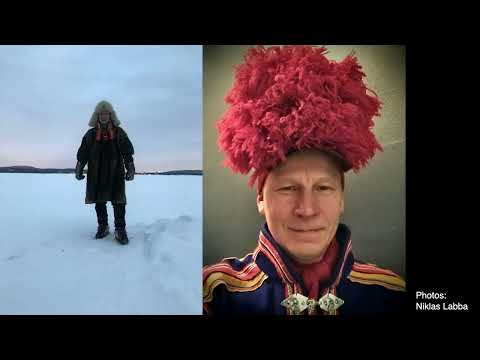
In the dark Arctic winter, a strange clicking moves across the tundra — not branches, but reindeer tendons slipping over bone, an adaptation that helps them stay connected when vision fails. Scientist Michael Palace spent more than a decade there mapping change. He didn’t expect that the reindeer — and the Sámi who herd them — would retrain how he listens, and how he does science.